Hope for the future is born in the present.

The Slavery Memorial Committee is committed to ensuring a dignified commemoration of the history of slavery throughout the Kingdom. From Aruba to Amsterdam and from Bonaire to Groningen: the history of slavery affects us all. We connect communities, give space to diverse voices, and work on awareness, recovery, and a shared future.  

About Us

The Slavery Memorial Committee

Established on January 6, 2025, the Slavery Memorial Committee brings together representatives from across the Kingdom, including Bonaire, Curaçao, Sint Maarten, Sint Eustatius and Saba. Representation from Aruba and Suriname is currently in progress.
As an independent foundation, the Committee operates free from political influence, providing a platform for a variety of opinions and local initiatives. The Committee was founded in response to the Dutch government’s official apology for the history of slavery, highlighting the need for lasting recognition and reflection.

News

Stay updated on news, events and stories about the history of slavery and the work of the Slavery Memorial Committee

Our Mission

We are committed to a collective and respectful commemoration of the history of slavery across the Kingdom and Suriname.

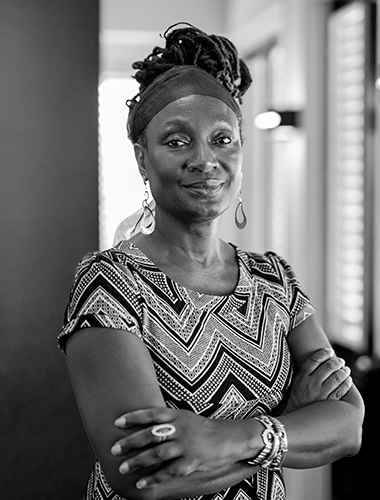
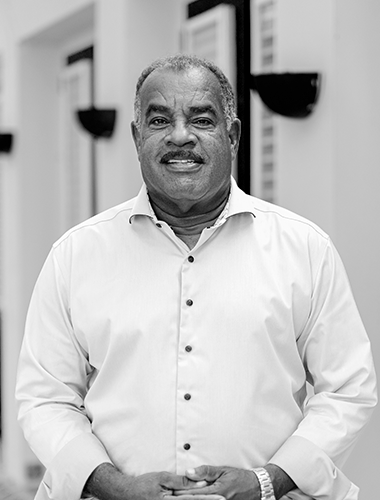
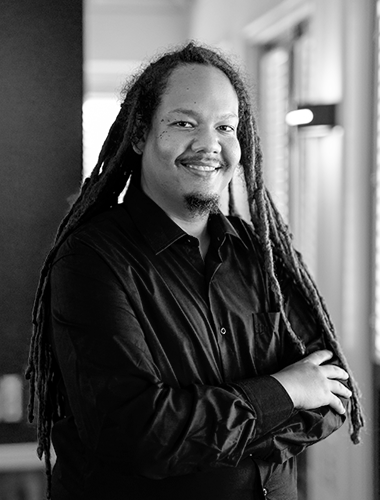
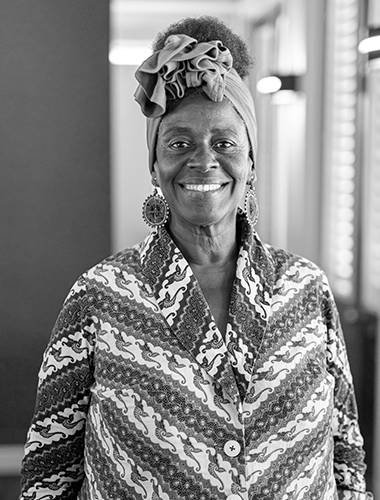
The Board

  • Astrid Elburg

  • Nolly Oleana

  • Dimetri Whitfield

  • Clara Reyes

  • Gregory Richardson

The work organization

  • Erik den Hoedt

  • Lucia Beck

Our Story, Our Strength: A history reimagined.

Frequently Asked Questions

Find answers to FAQs about the history of slavery and the work of the Slavery Memorial Committee.

On January 6th, 2025, the deed of incorporation was passed by the notary. This means that the Slavery Memorial Committee Foundation has officially existed since January 6th, 2025.

The foundation has a working organization that supports the committee. This working organization has employees in both the European Netherlands and the Caribbean part of the Kingdom. On Curaçao, an office was opened in Otrobanda on May 25th, 2025, and an office will also be opened on Sint Eustatius after July 1. The communities of the Caribbean part of the Kingdom are served from here.

i. organizing the National Commemoration of the slavery past, with attention to the meaning of commemoration, the inclusion of all communities involved (including Afro-Surinamese, Afro-Caribbean, Maroon and indigenous) and the connection with society within the Kingdom of the Netherlands as a whole;
ii. facilitating and supporting the (further) development of other commemorations and celebrations that are important for commemorating the slavery past within the Kingdom of the Netherlands and, if and to the extent that Suriname so wishes, Suriname;
iii. investigating, in consultation with the communities involved in the slavery past, how the slavery past can form part of the National Commemoration of the slavery past for those communities, geographically or thematically;
iv. exploring, together with the communities involved in the slavery past, possible broadening of the scope of the National Commemoration of the slavery past; 
v. exploring together with social partners the possibility of having a national holiday in the Kingdom on the date of July 1st in relation to the history of slavery;
vi. increasing social awareness of the history of slavery and its impact on the present within the Kingdom of the Netherlands;
vii. stimulating research into the history of slavery, and everything that is related to the above or can be conducive to it, all in the broadest sense of the word.
viii. The foundation does not aim to make a profit with the totality of its activities that are aimed at realizing or promoting its objective. It aims to be a cultural institution with a general interest

The foundation is in close contact with several existing institutions in both the Caribbean part of the Kingdom and in the Netherlands. The committee is of course open to contact and possibly also collaboration with other institutions.

The Minister of the Interior and Kingdom Relations (BZK) has chosen to establish the Slavery Memorial Committee with the associated mandate. NiNsee may nominate a member of the committee.

The Minister of BZK has made the Slavery Memorial Committee responsible for the National Commemoration of Slavery Past. NiNsee has been organizing this commemoration since the beginning of this century. For a good transfer, the Minister of BZK has therefore determined that in 2025, 2026 and 2027 NiNsee will organize the national commemoration under the direction and responsibility of the Slavery Memorial Committee. The committee and NiNsee will therefore work together very intensively in the coming years. NiNsee and the committee will also work closely together outside the National Commemoration, because both institutions focus on the same past and its effects and therefore both benefit from good cooperation. NiNsee will continue to develop into a knowledge institute in the coming years.

The Slavery Memorial Committee has played an important role in commemorating slavery history throughout the Kingdom since its establishment. Among other things, it will coordinate, organize and facilitate commemorations. In this context, the committee would like to contact the various governments within the Kingdom where necessary. This also applies to other organizations that play a role in addressing and commemorating slavery history.

The conversation with Suriname is still ongoing. The foundation would like to welcome a member who will take a seat in the Slavery Memorial Committee on the recommendation of Suriname. Whether and when this will happen is not yet known.

The committee draws up a profile for the size and composition of the committee, taking into account the nature of the foundation, its activities and the desired expertise and background of the members of the committee. The members are then nominated by the various authorities and the members are appointed by the committee on the binding recommendation of an appointment advisory committee of at least two people.

The members have all been nominated on the basis of their administrative and substantive expertise. Their areas of expertise, specialisms and experiences vary. In general, the committee members, in addition to geographical representation, also have collective knowledge of slavery history, culture of remembrance, colonial history, education, communication, finance and culture and all recognized languages ​​within the Kingdom of the Netherlands and Suriname are represented within the committee.

The committee intends to maintain constant and full contact with the younger generations, with special attention to those who are involved in the topic of slavery history. These generations will be actively involved in the activities and work of the committee. How exactly this will happen still needs to be worked out.

The members are nominated by the governments, but are not accountable to those respective governments. They operate statutorily without mandate or consultation and are expected to act in the interest of the committee and the assignment as a whole.

The committee must meet at least four times a year, of which at least once physically. The committee decides on the exact frequency itself. It is expected that the committee will meet more than four times a year, especially in the start-up phase.

The Program Team falls under the Ministry of the Interior and Kingdom Relations and the Committee is completely independent, without any political direction.

No, the committee is not accountable to the minister. The minister does appoint one official advisor. This official advisor can attend the meetings of the committee and has an advisory vote. He has been appointed to assist the committee in its relationship with the central government and politics, among other things.

Contact Us

Would you like more information about the Slavery Memorial Committee, our mission or how to apply for financial support, please get in touch. For questions relating to the Caribbean part of the Kingdom or the Netherlands, please contact us via the following channels:

Address

Caribbean part of the Kingdom
Bèlvedèrestraat 43-45,
Otrobanda, Curaçao

European Netherlands
Zeestraat 85
2518 AA, The Hague

Email

For any questions or inquiries, please contact us via email by clicking the button below.

Phone

Curaçao
+5999 465 1106

Let’s be good ancestors
for future generations.